
Urban mobility without a private car – results from Vienna’s “Auto-Wette”
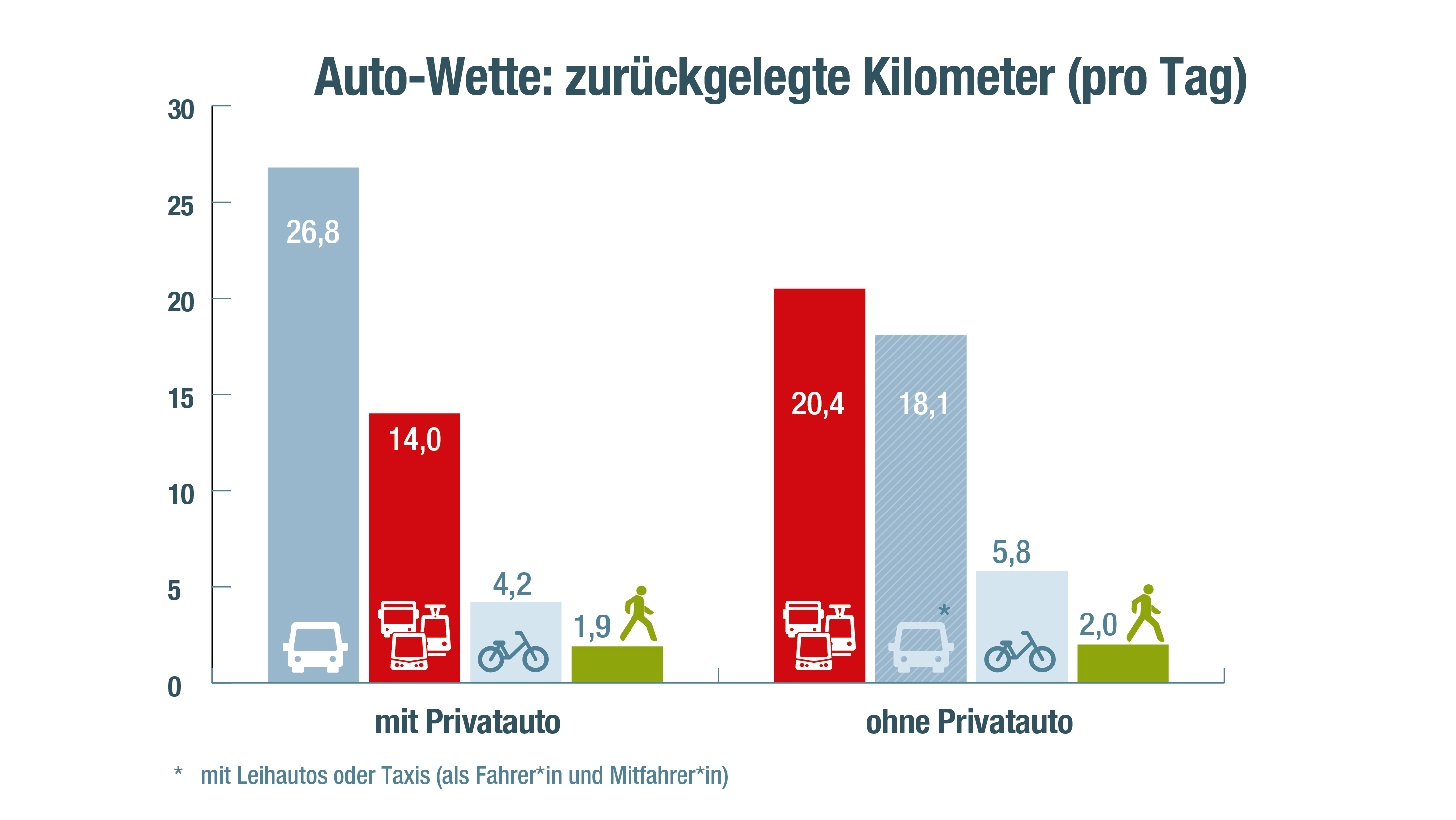
Giving up a private car in the city is not only feasible but often more cost-effective and climate-friendly—without noticeable losses in mobility.
Study design:
- Duration: 3 months without a private car; app-based trip tracking throughout
- Incentive: €500 mobility credit for alternative modes (walking, cycling, public transport, sharing, taxi)
- Data basis: movement and spending data, before–after comparison, supplementary surveys
Main findings:
- Finances: Monthly mobility expenses fell by an average of 40%. The €500 credit was rarely fully used.
- Climate: A total of 5.5 tons of CO2 were saved during the test phase—equivalent to the annual CO2 sequestration of roughly 440 trees.
- Accessibility and time: Destinations were on average 5% farther away; daily travel time increased by only about 3%—mobility was effectively maintained.
- Travel behavior: Over 80% of trips were made using environmentally friendly modes (walking, cycling, public transport).
- Long-term effects: More than half of the surveyed households (15 out of 28) have already sold their car or plan to do so.
The findings show that in dense, multimodally served urban districts, everyday mobility without a private car can be organized reliably and practically—with clear cost advantages and measurable climate benefits. At the same time, structural challenges remain for trips beyond the city, especially toward suburban and rural areas. In these contexts, service density, temporal reliability (early/late services), and sharing options are crucial.
Research team: Oliver Roider (Project lead), Reinhard Hössinger, Roman Klementschitz, Tobias Dürhammer, Roxani Gkavra, Vera Kretschmer
We thank Wiener Linien for the collaboration and all participating households for their contribution.