
Mobility Transition in Eisenstadt
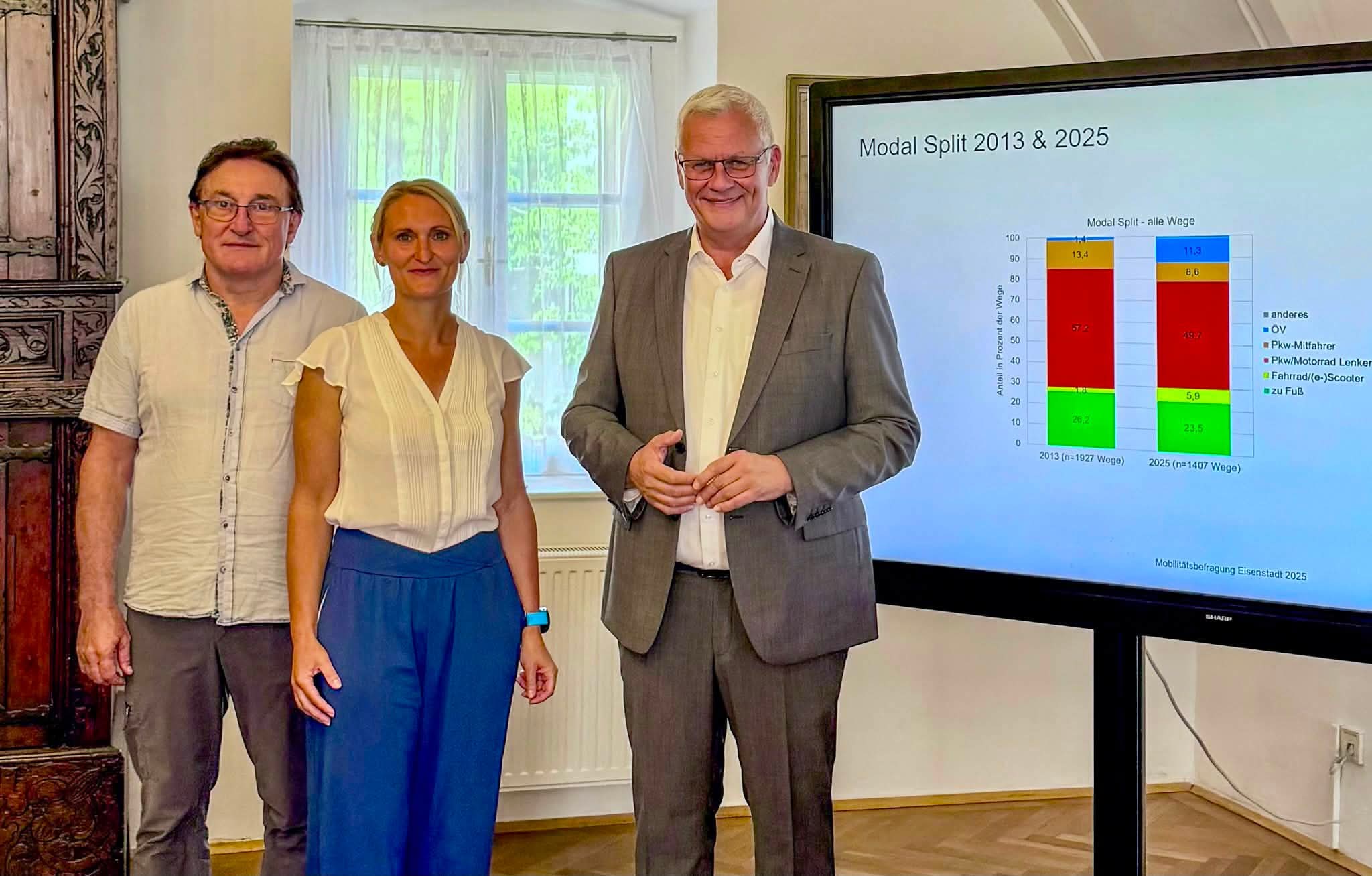
Commissioned by the City of Eisenstadt, the study analyzed 789 questionnaires from residents and commuters, revealing substantial shifts in daily travel behavior compared to the 2013 baseline:
- Surge in public transport: Public transit's share of the modal split grew nearly eightfold, rising from 1.4% to 11.3%. The local city bus (Stadtbus) acts as the primary catalyst, covering 5.7% of all trips on its own and functioning as an essential network feeder.
- Tripling of cycling rates: The proportion of trips made by bicycle, e-bike, or e-scooter grew from 1.8% to 5.9%, reflecting sustained investments in safe, dedicated cycling infrastructure.
- Decrease in motorized private transport: Private car journeys dropped from 57.2% to 49.7%. In addition, the average daily distance traveled by car per person fell noticeably from 25.7 km to 15.5 km.
- Growth of the Umweltverbund: Sustainable transport modes—walking, cycling, and public transit—now account for 40.7% of all trips (up from 29.4% in 2013).
The findings clearly illustrate that targeted, long-term investments in attractive transit alternatives and active mobility infrastructure effectively reshape travel habits.
Photo Credit: Stadt Eisenstadt
15.09.2026