
Agricultural entomology
Insect-plant-interactions ~ Climate change ~ Biological control ~ Agrobiodiversity ~ Use-of-potential & Risk analysis
Agricultural entomology
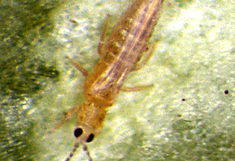
Agricultural Entomology studies the ecology and behaviour of insect pests and their natural enemies in agricultural and horticultural crops. The current focus is primarily on harmful and beneficial thrips (Thysanoptera) in horticultural and field vegetable cultivation. The research centres on three key areas:
- Conservation biological control and habitat management: Research is being conducted into how suitable flowering and habitat structures can be used to promote the natural enemies of pests. Focus is given to promoting beneficial insects in onion cultivation.
- Host plant selection behaviour of insect pests: Research is being conducted into how the chemical, visual, and physical properties of plants influence their orientation, colonisation, and egg-laying. Based on this research, methods of behavioural control are being developed that use chemical and physical stimuli in a targeted manner to influence the behaviour of insect pests.
- New pest problems caused by climate change: Changes in temperature and precipitation can influence the development and spread of insect pests. In addition to introduced or invasive species, the behaviour of native pests is also being investigated.
contact: Ao. Prof. DI Dr. Elisabeth Koschier (location Vienna)
Biological pest control
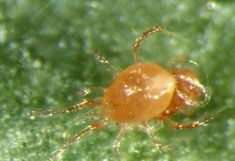
Behavioural, ecological and evolutionary aspects of pest arthropods and their natural enemies are the research topics of this group. Mites are used as model organisms to investigate predator-prey interactions among pest species (spider mites) and their natural enemies (predatory mites) at individual and population level.
Currently, we are dealing with the effects of extreme heat waves induced by climate warming on the biological control of the spider mite Tetranychus urticae by its predator Phytoseiulus persimilis. The preliminary lab-experiments at individual level may indicate that the predator is more heat-sensitive than its prey. The spider mite control may not be ensured under heat waves, when this trend is also confirmed in a tri-trophic system at population level.