
FACULTY
The Faculty of the Doctoral School Social Ecology consists of 16 Principal Investigators (PIs) and 7 Associated Faculty Members from six Departments of BOKU.
- Department of Economics & Social Sciences
- Department of Forest and Soil Sciences
- Department of Integrative Biology
- Department of Landscape, Spatial and Infrastructure Sciences
- Department of Sustainable Agricultural Systems
- Department of Water, Atmosphere & Environment
Principal Investigators
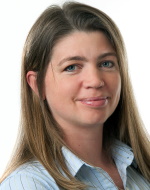
Nina EISENMENGER is Associate Professor for Industrial Ecology at the Institute of Social Ecology, BOKU Vienna. Her research focus is on social metabolism and sustainable resource use and the understanding of current environmental problems such as climate change, resource scarcity, and unequal trade, as a result of our biophysical society-nature interactions. She studied patterns and trends in resource use, underlying socioeconomic drivers, and synergies and trade-offs between resource efficiency and decarbonisation or biodiversity. Nina Eisenmenger participated in the international activities on the development of methods and indictors of material flow accounts (MFA), compilation of Eurostat and UN datasets. Nina Eisenmenger consulted the Austrian ministries, the European Commission, the OECD, and the International resource Panel in designing policy programmes on resource efficiency/productivity, dematerialisation, and circular economy.
Further information
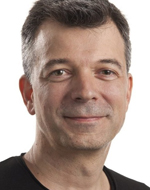
Karlheinz ERB is a social ecologist and associate professor for Land Use and Global Change at the Institute of Social Ecology. His research interest is on land use as a key society-nature interaction in the context of sustainable development. He aims at empirical and conceptual assessments and analyses of dynamics and impacts of land use and land management, from the local to the global level, in long-term perspectives as well as scenario approaches. Topics include global food security, biodiversity loss, and climate change. He was lead author of the IPCC Special Report on Land and Climate Change and was a member of the Scientific Steering Committee of the Global Land Programme.
Further information
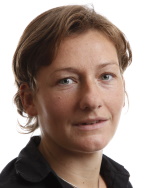
Veronika GAUBE is Social Ecologist and University Assistant and Senior Scientist at the Institute of Social Ecology, Department of Economics and Social Sciences. Her research focuses on land use and land use change with a focus on agriculture. She works with integrated social-ecological modelling approaches based on agent-based modelling in order to analyse and understand human decision making under different socioeconomic and ecological scenarios affecting land and resource use on a local and regional scale. In this context, her areas of interest include time use and sustainability, long-term socio-ecological research (LTSER) as well as inter- and transdisciplinary research.
Further information
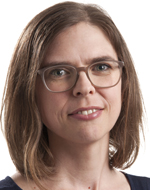
Simone GINGRICH is professor for Environmental History at the Institute of Social Ecology, Department of Economics and Social Sciences. Her research addresses sustainability challenges in the context of industrialization. She combines approaches of quantitative environmental accounting (e.g., greenhouse gas emissions accounting, carbon accounting) with historical source analysis. Her work investigates long-term changes in land and energy use at local, national and global scales, covering up to 200 years, and explores their societal drivers and environmental impacts. By providing historical context and identifying problem shifts, her research aims at informing current sustainability debates.
Further information
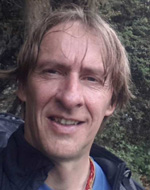
Georg GRATZER is Professor and deputy head of the Institute of Forest Ecology at the Department of Ecosystem Management, Climate and Biodiversity. He is head of the steering group of BOKU’s Centre for Development Research. His research interests gravitate around sustainable development and dynamic processes in forest ecosystems and spans many continents, providing a global perspective on mountain forests and human communities. He also directs the Mountain Forestry Graduate Program, which brings masters students together from around the world – particularly mountainous regions of Africa, the European Alps, and the Himalayas. He is committed to improving livelihoods in poor countries through University education and research for development. Since the adoption of the Agenda 2030, he explores the potential of the SDGs for tackling global challenges and on the role of Universities in reaching them.
Further information

Astrid GÜHNEMANN is Professor of Transport for Sustainable Development and Head of the Institute for Transport Studies. Her research focus is on the development of methods for sustainability assessment in transport, based on environmental and ecological economics and system dynamics modelling in transport with the aim to analyse long-term impacts of transport policies, strategies, infrastructure investments, technological and societal changes. She has taken a leading role in many European and national research projects that aimed at assessing the impacts of transport and developing innovative policies to deal with them.
Further information
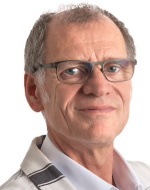
Willi HAAS is a Senior Scientist/Lecturer at the Institute of Social Ecology and graduated as mechanical engineer and obtained his doctorate in philosophy, subject sociology and has a venia docendi for the scientific subject social ecology. He investigates society-nature interactions across time and space to draw insights for a better understanding of the option space for the next transition to a post-fossil society. A key part of his expertise is on the potentials and limits of a circular economy and he was commissioned as expert for the European Commission (JRC) on this topic. He was co-chair of the APCC’s Austrian Special Report on Health, Demography and Climate Change and headed studies in the interface of health and climate. Current key interests include conflicts, barriers and leverage points for the urgently needed transition, with a focus on the multiple and complex interrelationships between issues such as health, the circular economy, decarbonsation, climate change, stakeholder engagement and the role of science.
Further information
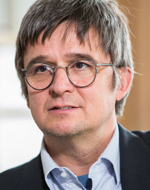
Helmut HABERL is Professor at the Institute of Social Ecology, Department of Economics and Social Sciences. His research interests include socioecological metabolism, integrated land-system science and long-term socio-ecological research. He contributed to several international assessment reports, e.g. IPCC-AR5 and the Global Energy Assessment, and is PI of the ERC Advanced Grant project "Understanding the Role of Material Stock Patterns for the Transformation to a Sustainable Society" (MAT_STOCKS).
Further information
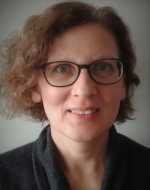
Gertrud HAIDVOGL is senior scientist at the Department of Ecosystem Management, Climate and Biodiversity and specialized in environmental history and historical ecology of rivers. Her research deals with long-term change of fish populations and communities and the drivers of this change, the development of rivers as a societal resource (esp. overall trends, fisheries, energy, transport) and the ecological conditions of riverine landscapes as a consequence of past socio-ecological interactions. In recent years, a focus was on the Danube. In particular, the co-evolution of Vienna and the Danube was investigated in two research projects together with the Institute of Social Ecology.
Further information
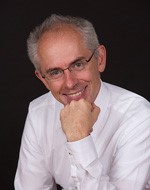
Thomas HEIN is Professor at the Department of Landscape, Water and Infrastructure, Inst. of Hydrobiology and Aquatic Ecosystem Management as well as affiliated to WasserCluster Lunz. His research topics cover nutrient and carbon cycling and biodiversity aspects of primary producers and invertebrates within riverine landscapes and along critical interfaces such as aquatic-terrestrial boundaries as well as interdisciplinary ecohydrological approaches based on a combined high resolution observational, experimental and integrated modelling approach. A better understanding how societal processes shape ecosystem functioning and services and could limit ecosystem management is a central question of our research.
Further information

Marion HUBER-HUMBER is full professor for “Global Waste Management” and head of the Institute of Waste Management and Circularity (ABFK) at the Department LAWI (Landscape, Water and Infrastructure) at BOKU University.
Her current research fields focus on the investigation of global waste management concepts, sustainable management of waste to save resources within a circular economy, biological waste processing, municipal waste treatment strategies, sustainable landfill technologies, process and emission monitoring, reduction of greenhouse gas emissions (like biological methane oxidation in biocovers on landfills) and carbon capture and storage concepts within waste management.
Further information
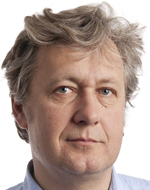
Fridolin KRAUSMANN is Professor of Sustainable Resource Use at the Department of Economics and Social Sciences (Institute of Social Ecology). He is a leading expert in social metabolism research and has pioneered the development of socio-ecological methods like material and energy flow analysis (MEFA framework). He investigates socio-metabolic transitions and changes in the use of energy, materials and land at different spatial and temporal scales. His current research focuses on the role of in-use stocks of materials as drivers for material and energy demand (stock-flow-service nexus) and the socio-metabolic assessment of Circular Economy.
Further information
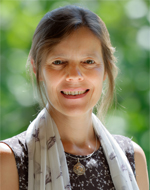
Stefanie LEMKE is professor and head of the Institute for Development Research, Department of Agricultural Sciences. Her research experience spans more than 20 years, mainly in sub-Saharan Africa. Areas of work include the human right to adequate food/nutrition, gender, women’s rights, food/ nutrition security, sustainable diets, local food systems, sustainable livelihoods, governance of natural resources. She applies gender-transformative, rights-based, feminist, participatory and transdisciplinary approaches, co-conceptualizing research with local actors. She also worked as consultant for various civil service organizations in the fields of nutrition counselling and livelihoods of smallholder farmers.
Further information
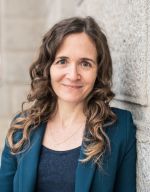
Eva OBURGER is Associate Professor for biogeochemistry with a focus on plant-soil interactions at the Institute of Soil Research, Department of Ecosystem Management, Climate and Biodiversity. Her research focuses on deepening our understanding of plant–soil–microbe interactions and the role of root and rhizosphere traits in enhancing soil health and sustainable crop production. She has a particular interest in root exudation, recognizing it as a key driver of rhizosphere processes. Her research also explores how plant–soil–microbe interactions influence nutrient cycling, and the transformation and mobility of pollutants in soil. In addition, she is strongly committed to advancing experimental methodologies and integrating approaches from multiple scientific disciplines to address complex environmental challenges in a changing climate.
Further information
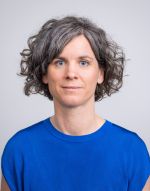
Melanie PICHLER is a Professor of Social Ecology at the Institute of Social Ecology. Trained in political science and political ecology, she analyzes conflicts, politics and power relations in contemporary social-ecological transformation processes. In her research projects, she has established interdisciplinary collaborations between quantitative biophysical assessments and context-specific qualitative analyses to better understand the barriers and opportunities for transformative change in different sectors (e.g., transport, housing/construction, agriculture and forestry) and regional contexts (especially Europe and Southeast Asia). At the Institute of Social Ecology, she coordinates the thematic area of social-ecological transformations.
Further information
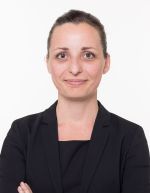
Petra RIEFLER is Professor at the Institute of Marketing and Innovation (WiSo) where she leads the Sustainable Consumer Behavior group. Her research focuses on demand-side climate mitigation, including consumer sufficiency, dietary change, consumer education on food sustainability, and sufficiency-oriented business models. She has published in journals such as Ecological Economics, Food Quality and Preference, and Appetite. She is an area editor for the Journal of International Marketing and serves on the Review Board of the Journal of Sustainable Marketing. Her methods include scale development, experiments, and structural equation modeling.
Further information

Anke SCHAFFARTZIK is an Associate Professor at Central European University's Department of Environmental Sciences and Policy. Her research focuses on the quantifiable patterns in global and international resource use and trade and on how these patterns relate to discernible phenomena such as (ecological) unequal exchange, extractivism, off-shoring, extractive expansion, and environmental justice movements. Anke's overarching interest lies intersecting forms of inequality, including environmental, economic, and social inequalities.
Further information

Martin SCHMID is Associate Professor at the Institute of Social Ecology (SEC). He is historian by training, concentrating on interdisciplinary environmental history. Environmental historians study the mutual relationship between people and the rest of nature over longer periods of time, from a few decades to a few millennia. Environmental History provides references from the past to understand and analyse the rationale, intensity and velocity of the ongoing process of industrialization. At SEC, Martin has contributed to developing long-term socio-ecological research (LTSER), an approach to integrate ecological with socio-economic and cultural research systematically. His research interests include the linkage of societal change with natural resource use, past energy transitions, urban and aquatic environmental history and environmental dimensions of wars.
Further information

Juliane STARK is Associate Professor and Deputy Head of the Institute for Transport Studies at the Department of Landscape, Water and Infrastructure. Her research focuses on mobility behaviour, particularly children’s and young people’s mobility, mobility-related attitudes, survey and evaluation methods, and the relationship between active mobility and health. She coordinates and contributes to numerous European and national research and education projects. Her work advances evidence-based transport planning and supports the development and evaluation of sustainable mobility policies. As a Science Ambassador, she engages with schools and the public to communicate research.
Further information
Dominik WIEDENHOFER is a Senior Scientist at the Department of Economics and Social Sciences. His research utilizes a socio-ecological systems perspective towards understanding the potentials and barriers for more sustainable society-nature interactions from a supply- and demand-side perspective. For this purpose, he investigates the dynamics and interrelations of material and energy use, subsequent wastes and emissions and the material stocks of infrastructure, buildings and machinery, which jointly provide functions and services to society. He also assesses the role of global supply chains for resource use and emissions, to understand interlinkages across the world economy.
Further information
Associated Faculty Members
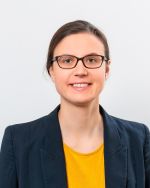
Katharina BOHNENBERGER is a postdoctoral University Assistant at the Institute of Social Ecology at BOKU's Department of Economics and Social Sciences. In her work she integrates welfare system research and sustainability sciences and develops new theoretical and methodological approaches for understanding the socio-ecological metabolism and growth-dependency of welfare states. She analyses transformative change of welfare provisioning and examines eco-social policies through the sustainable welfare approach in multiple sectors, such as work and employment, housing, occupational health, and investigates the emergence of new institutions that address eco-social risks.
Further information
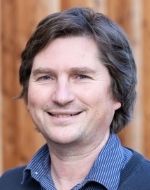
Aron BUZOGÁNY is a political scientist and Associate Professor of European Environmental and Energy Policy at the Institute of Forest, Environmental and Natural Resource Policy. His work explores the conflicts surrounding sustainability transitions and broader processes of societal change and institutions that moderate these. Much of his research is about EU politics and policymaking, with a particular focus on policy implementation within and beyond the borders of the EU, as well as the role of political parties, interest groups and social movements in shaping environmental and natural resource policy.
Further information
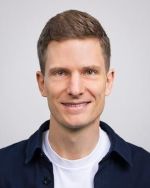
Felix M. DORN is a University Assistant (postdoc) at the Institute of Social Ecology, Department of Economics and Social Sciences. His research examines the political ecology of decarbonization in Latin America and Southern Europe, focusing on critical raw material and hydrogen frontiers. Based on extensive fieldwork in Argentina, Chile, Colombia, Spain and Portugal, he studies how global energy and mineral transitions reproduce, transform or create new forms of inequality and uneven development. He complements his academic work with documentary photography and film, including a documentary on lithium extraction and Indigenous communities in Argentina.
Further information

Christian DORNINGER works as a postdoctoral researcher at the Institute of Social Ecology, Department of Economics and Social Sciences. His research interest lies at the intersection of societal resource use, inequality, systemic interlinkages of global production and consumption, and transformation. He employs quantitative social ecological modelling across spatiotemporal scales – from households, regions, and nations to the global scale over extended periods – to investigate change, interconnections, and barriers related to sustainable resource use and climate change mitigation. He has a particular interest in empirically assessing the theory of ecologically unequal exchange.
Further information

Sarah MATEJ is a postdoctoral researcher at the Institute of Social Ecology at BOKU's Department of Economics and Social Sciences. Her research in land-system science combines integrated social-ecological modelling with GIS analyses to assess patterns and dynamics of land-use change and their effects on biodiversity and the global carbon cycle. Focusing on the interlinkages and trade-offs between biomass use and other ecosystem functions and processes, her research aims to identify pathways towards sustainable land use within planetary boundaries.
Further information
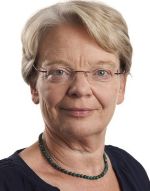
Barbara Smetschka is Senior Scientist at the Institute of Social Ecology, BOKU Vienna. Her research focus is on topics including socio-ecological transformation, climate change, time-use studies, sustainable urban and rural development, participatory research, inter- and transdisciplinary research, and gender and sustainability research. She has many years of experience as a social scientist in (inter)national, inter- and transdisciplinary research projects, as well as with supervision and teaching on the social challenges of the socio-ecological transformation, climate-friendly living, gender and time-use studies and stakeholder involvement.
Further information

Laura Maria WALLNÖFER is a Postdoctoral Research and Teaching Associate at the Institute of Marketing & Innovation, Department of Economics & Social Sciences. With an interdisciplinary background in Energy & Transport management and Sustainable Development, she completed her PhD on individuals as change agents at the DocSchool for Transitions to Sustainability (T2S). Her current research explores how the intersecting influence spheres of transition actors (individuals, industries, institutions) can be coordinated to better facilitate sustainable transformation through multi-actor processes needed to, e.g., ban climate-damaging advertising and design transformative flood risk communication.
Further information
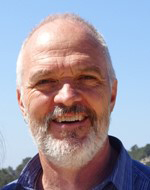
Werner ZOLLITSCH is Professor for Sustainability of Livestock Production Systems with the Division of Livestock Sciences of the Department of Agricultural Sciences. He is also head of the BOKU-Centre of Global Change and Sustainability. His main research interests are directed towards analysis of sustainability aspects of livestock production systems; impacts of feeding strategies on various aspects of animal production, particularly in a low-input and organic farming context and feed resource development for livestock production are also covered. Teaching activities focus on livestock production systems, sustainability assessment of livestock production and feeding strategies in organic farming.
Further Information