
Supervision - The Challenge of a Doctorate
How are the PhD students at BOKU doing? How are you doing in your PhD program at BOKU?
Brief Report of the Survey Results
Ph.D. and Doctoral Programs at BOKU: Students Share Their Experiences and Hopes
In May 2026, the Coordination Office conducted an anonymous, bilingual survey among PhD and doctoral students. The goal was to learn more about their experiences with supervision and support, their workload, challenges in their daily academic lives, and their career prospects.
A total of 168 students participated in the survey. The results reveal both positive experiences and structural challenges, and highlight areas where improvements are needed.
Key Findings
49% feel that their workload is too heavy (67 out of 137 respondents)
45.4% are still undecided about their professional future (59 out of 130 respondents)
32.3% would like to continue conducting research at BOKU (42 out of 130 respondents)
Description:
1. Heavy workload and time pressure
Just under half of those surveyed feel that their workload is too heavy. They cite, in particular, the challenge of juggling research, publications, teaching, project work, and administrative tasks all at once. Unclear degree requirements and fixed-term employment contracts also add to the pressure.
2. Improve Care and Support
Experiences with supervision vary. In particular, there is a desire for more regular supervision meetings, constructive feedback, clear expectations, and transparent milestones. Additional points of contact and independent counseling services in the event of conflicts are also considered important.
3. Greater financial and career security
Fixed-term contracts, expiring project funding, and limited budgets for conferences and professional development pose a challenge for many. Students are seeking better funding options, particularly for the final phase of their studies, as well as more support in applying for grants.
4. Less bureaucracy and practical coursework
The feedback indicates a desire for simpler administrative processes, clearer information, and more consistent graduation requirements. Required courses should be better aligned with actual research needs.
5. Greater networking and psychosocial support
Regular opportunities for exchange, writing workshops, coworking spaces, and communal areas could strengthen networking among doctoral students. In addition, psychological counseling and confidential support services are cited as important sources of support.
Career Prospects: Many Are Still Undecided
The respondents’ future career plans paint a varied picture. 32.3% would ideally like to continue their research careers at BOKU, while another 23.1% can envision pursuing research outside of BOKU. 30% do not plan to work in research in the future. The largest share (45.4%) is still undecided. Multiple responses were allowed.
The feedback makes it clear that the decision to pursue an academic career does not depend solely on an interest in research. Job security, funding prospects, and the perceived work culture also play an important role.
What does it take to have a good doctoral program?
Five key areas for action can be identified based on the results:
- Strengthen academic advising: Regular meetings, transparent requirements, and targeted professional development for advisors.
- Improve working conditions: Realistic workloads and sufficient time for research and the dissertation.
- Increase financial security: More reliable employment arrangements and better funding opportunities.
- Promote networking and well-being: More opportunities for exchange and psychosocial support services.
- Simplify the organization of studies: Less bureaucracy and courses tailored to students’ needs and relevant to their field of study.
Conclusion
The survey makes it clear that improving PhD and doctoral programs cannot be achieved solely through additional support services for students. Rather, it also requires further development of the institutional framework for research, advising, and employment.
Therefore, it must be our shared goal to create a learning and working environment that equally supports reliable guidance, good working conditions, academic development, and personal well-being.
Through its “Sustainable Diversity” strategy, the Coordination Office pursues this goal by implementing various measures in a long-term and sustainable manner across all areas of the university—including research, teaching, workplace culture, and university administration.
*Note: Depending on the question, the numbers refer to different numbers of responses (between 130 and 137). The survey is not automatically representative of all PhD and doctoral students at BOKU.
The Challenge of a Doctorate — Workshop as Part of Awareness Days 2026
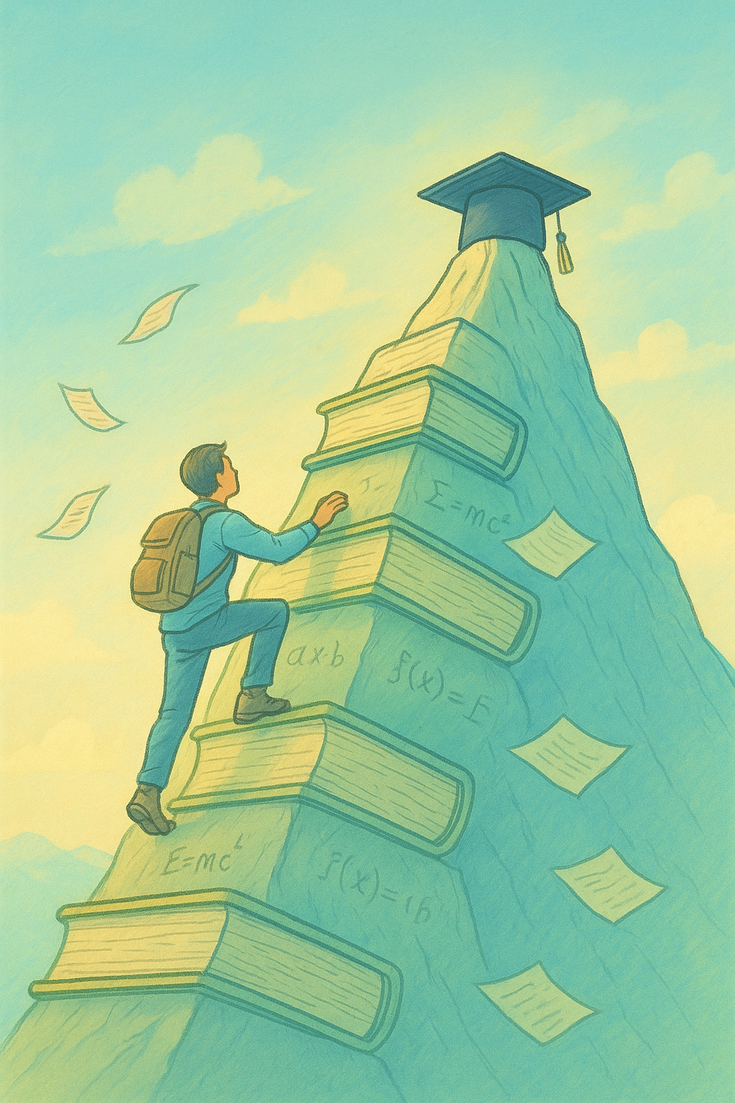
Psychosocial Skills for Doctoral Students (DE/EN)
with Nadja Springer
This workshop aims to explore ways to better leverage and strategically apply one’s own strengths in order to tackle the demands of doctoral studies with greater self-confidence. Through practical exercises, discussions with others, and individual reflection, participants will gain valuable insights that will empower and motivate them to continue their doctoral studies successfully.
Save the Date: November 12, 2026, 10:00 a.m. – 12:30 p.m.
Anmeldung via Termino: Link folgt in Kürze