
Can I entrust you with a task? | Are you available?
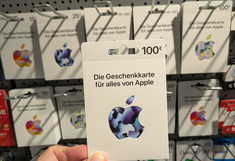
A BOKU professor is asking you to buy Apple gift cards?
Doesn't that seem strange to you?
- Look out for the following characteristics:
- Short subject, e.g., “Are you available?” and “Urgent favor”, and a short message to bypass spam/phishing filters
- Impersonating someone in a position auf authority.
- An unpleasant sense of urgency is created.
- The sender clains to be unavailable to talk or clarify.
- The sender's address does NOT match the usual address of the person the sender is pretending to be.
- The reply address is different from the sender's address.
- Again: Always pay attention to the actual sender address (not the name).
- Trust your intuition.
- f you find something strange, take your time.
- Are you hesitant to inquire directly by phone? That is understandable.
However, perhaps you can reach the respective secretary? - You can always consult the BOKU IT hotline: https://short.boku.ac.at/it-hotline-en
- Find out about current phishing waves at BOKU: https://short.boku.ac.at/it-phishing-en
- If you think someone's email account has been hacked, it's not a good idea to inform that person by email. It's better to contact BOKU IT.
- Never pass on gift card codes. You will never see your money again.
- Familiarize yourself with the basic patterns of social engineering and phishing.
Once you understand the patterns, it is relatively easy to recognize new variants: - Employees: Take the self-test on information security in the BOKU training pass:
https://learn.boku.ac.at/mod/h5pactivity/view.php?id=1930107
Always pay attention to the actual sender address!
