Priv. Doz. Lukas Landler, Ph.D.

Institute of Zoology
University of Natural Resources and Life Sciences, Vienna
Gregor-Mendel-Straße 33
1180 Vienna
Austria

Phone: +43 1 47654 - 83334
Fax: +43 1 47654 - 83309
E-mail: lukas.landler(at)boku.ac.at

Room: MENH-EG/06

Business card
Research

Research interests

Since the start of my academic life, I have been fascinated by animals’ orientation and migration abilities. Of particular interest for me is the ability of animals to sense the Earth’s magnetic field. This resulted in several lines of research that I pursued over the years (see links under publications). For my newly established research group at the BOKU, I set out to study the interplay between amphibian conservation management in an urban environment and migration and orientation. In order to pursue this goal, I am working with the green toad (Bufotes virdis) in Vienna and surrounding areas, using mark-recapture as well as cutting-edge tracking technology in the field complimented by laboratory experiments. My research is supporting the conservation of this endangered species and provides crucial insights in the baffling migratory abilities of amphibians.

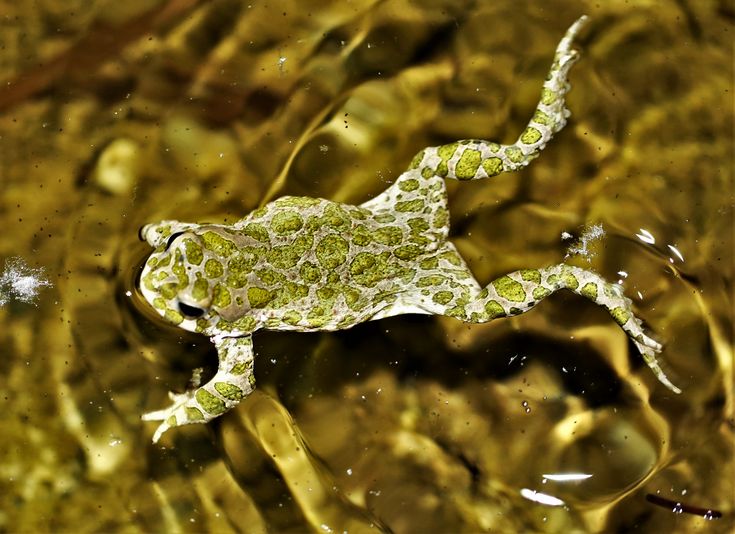
green toad © Lukas Fuxjäger

Research group

Here is an overview of the members of our research group. If you are a student and interested in a master thesis just send me an email!

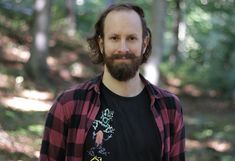
Stephan Burgstaller

Stephan Burgstaller

Stephan Burgstaller has been a member of the AG Landler research group since 2020. He obtained his Master’s degree in Zoology at the University of Vienna and subsequently completed his PhD at BOKU University Vienna. His early research focused on amphibian population dynamics, as reflected in his Master’s thesis on fire salamanders and parts of his doctoral work on green toads. During his PhD, his research diversified toward life history and behavioural ecology, which he investigated in the green toad. Since 2023, he has been involved in the citizen science project “AmphiBiom,” where he temporarily assumed project leadership in 2025.

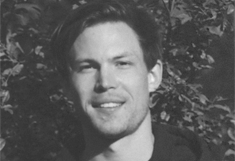
Maximilian Fitz

Maximilian Fitz

Maximilian Fitz completed his Bachelor's degree in Forestry at BOKU Vienna and is currently pursuing a Master's degree in Renewable Resources. His approach to research is shaped by a deep interest in ecological interrelationships and the interaction of various actors within ecosystems. As part of his Master's thesis titled "Population Dynamics of Two Urban Green Toad Populations", he is investigating two inner-city habitats in Vienna. Through his involvement in the research group of Lukas Landler, he can combine his interest in applied conservation research with practical fieldwork and contribute to a better understanding of urban amphibian populations.

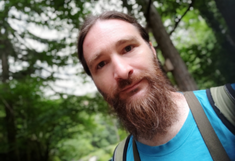
Yurii Kornilev

Yurii Kornilev

Yurii Kornilev is a zoologist and ecologist, specializing in amphibians and reptiles. He received a PhD in Zoology from the National Museum of Natural History, Bulgarian Academy of Sciences, focusing on the distribution and ecology of the two water snakes in Bulgaria. He received his MSc in Interdisciplinary Ecology with a concentration on Wildlife ecology and conservation from the University of Florida, USA, studying the ecology of a riverine turtle and the impacts of human disturbance. For over 20 years, he has conducted research and conservation projects on reptiles and amphibians in Bulgaria, Austria, and USA. He is continuing his research as part of the Landler group.
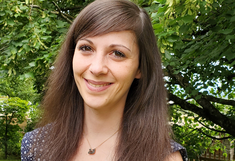
Janette Siebert

Janette Siebert

Janette Siebert has been working as a project coordinator for various Citizen Science projects since 2019, including the Roadkill and AmphiBiom projects at BOKU University. She is currently supporting the RG Landler team in publishing the project results from AmphiBiom and in designing additional Citizen Science projects.

Publications

A complete list of my publications can be found here. Alternatively, visit my google scholar or research gate site.

Research projects

Please see here my (almost) complete list of research projects I am involved in. For a short selection of current projects see below.

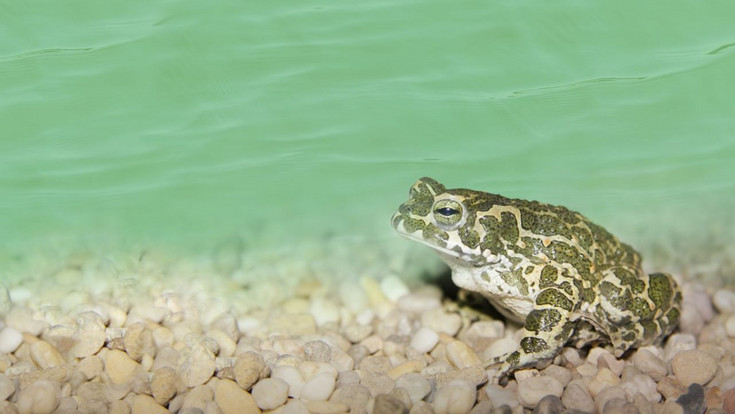
A green toad sitting on gravel

Green toad © Sven Dragon

Population ecology and migration dynamics along a gradient of anthropogenic disturbance

While the primary habitats of the green toads (Bufotes virdis) are becoming increasingly scarce, this steppe species managed to establish populations in anthropogenically altered environments, such urban and agricultural areas. However, also their secondary habitats are prone to destruction due to construction activities and building development. Such developments are likely to further isolate potential habitats of the green toad and decrease connectivity. In addition, established ponds are often not suitable for spawning, because of their late succession states. In order to plan conservation efforts and manage existing populations, we need to understand the distribution, population- and migration dynamics of the green toad. For this we will use ‘traditional’ population ecology methodologies, such as mark-recapture as well as cutting-edge animal tracking technologies. Such field studies along a urban-rural gradient will be complemented by laboratory behavioral experiments.

The dorsal pattern of the green toad: color change, hormones and environmental influence

This effort is spearheaded by Stephan Burgstaller and aims to understand why and under which circumstances green toads can change their dorsal pattern coloration. Such changes have been described in early laboratory work and may have led to the German name of this animal (the “changing toad”). We will explore which hormones are underlying such ability and what can cause coloration changes in the natural habitats, using a combination of field and laboratory studies.