
Forschung extern
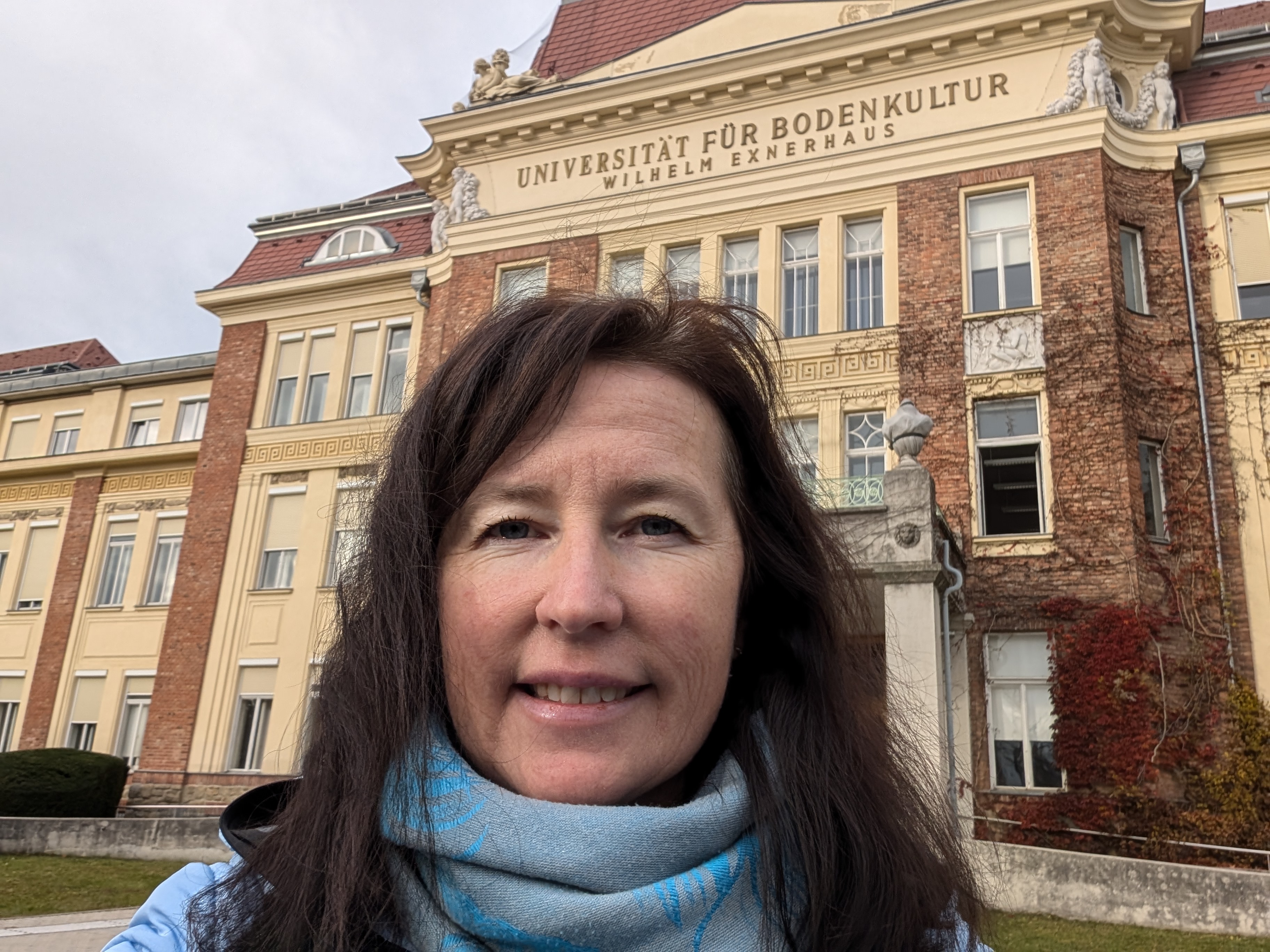
What is your general research focus?
My research focuses on organic and conventional agri-food systems, linking management with food security and climate change. Our research team works on the production of cereals, potatoes, legumes and perennial crops like intermediate wheatgrass and grasslands. I focus on yield stability, nutrient use efficiency, protein and fiber content in cereals. We are also interested in finding ways to increase the value of cereals through valorization and circular bioeconomy. Building on my PhD research in wheat genetics, I combine agronomy and genetics e.g. by characterizing nitrogen uptake and transport-related genes under different fertilization rates.
What are the current challenges and opportunities for Estonian agriculture?
Estonian agriculture faces several key challenges. There is a shortage of skilled workers, as population is small and one third of Estonian population lives in the wider Tallinn area. Extreme weather, such as spring droughts, mid-season floods, and increasing unpredictability of weather together with more intensive diseases and pests, put crops at risk. These pressures, combined with rising costs and environmental demands, require farmers to adapt quickly to stay sustainable and competitive. Nearly one quarter of Estonia’s land area is agricultural (approx. 1 million hectares) and it is well suited for cereal and grassland production. Latter is important in producing the grass silage feed needed for Estonian milk industry. Climate change leads to milder winters, thus much more of the Central-European varieties can be grown in Estonia. So, the climate, together with having more freshwater than needed, is providing more opportunities in the future. Estonia has a high level of technology adoption on farms, which enables quick adaption of innovation. At the same time, Estonia started the development of organic cropping solutions in 1991, after regaining the independence, which has led to the situation where 23% of agricultural land is managed organically. Opportunities lie within the improvement of valorization chains and bioeconomy.
What topics will you cover in your lectures at BOKU?
I will give an overview of Estonian agriculture, highlighting the lessons learned over the last decades, and showing how these led to a high share of organic cropping and technology adoption. I will also talk about gender and generational succession.
What are your motivations and personal expectations regarding your visit to BOKU?
BOKU and the Estonian University of Life Sciences (EMU) are both part of the ELLS network, I’m eager to learn BOKU’s best practices, experience its day‑to‑day research environment, and engage with students. I aim to build a long‑term collaboration across teaching, research, and farmer partnerships including opportunities for co-supervised theses and Estonian fieldwork.
Prof. Evelin Loit‑Harro is currently President of the European Society for Agronomy and invites all BOKU researchers to the annual congress in Tartu, Estonia, on 24-28 August 2026.