
Steven Runo Guest Professor
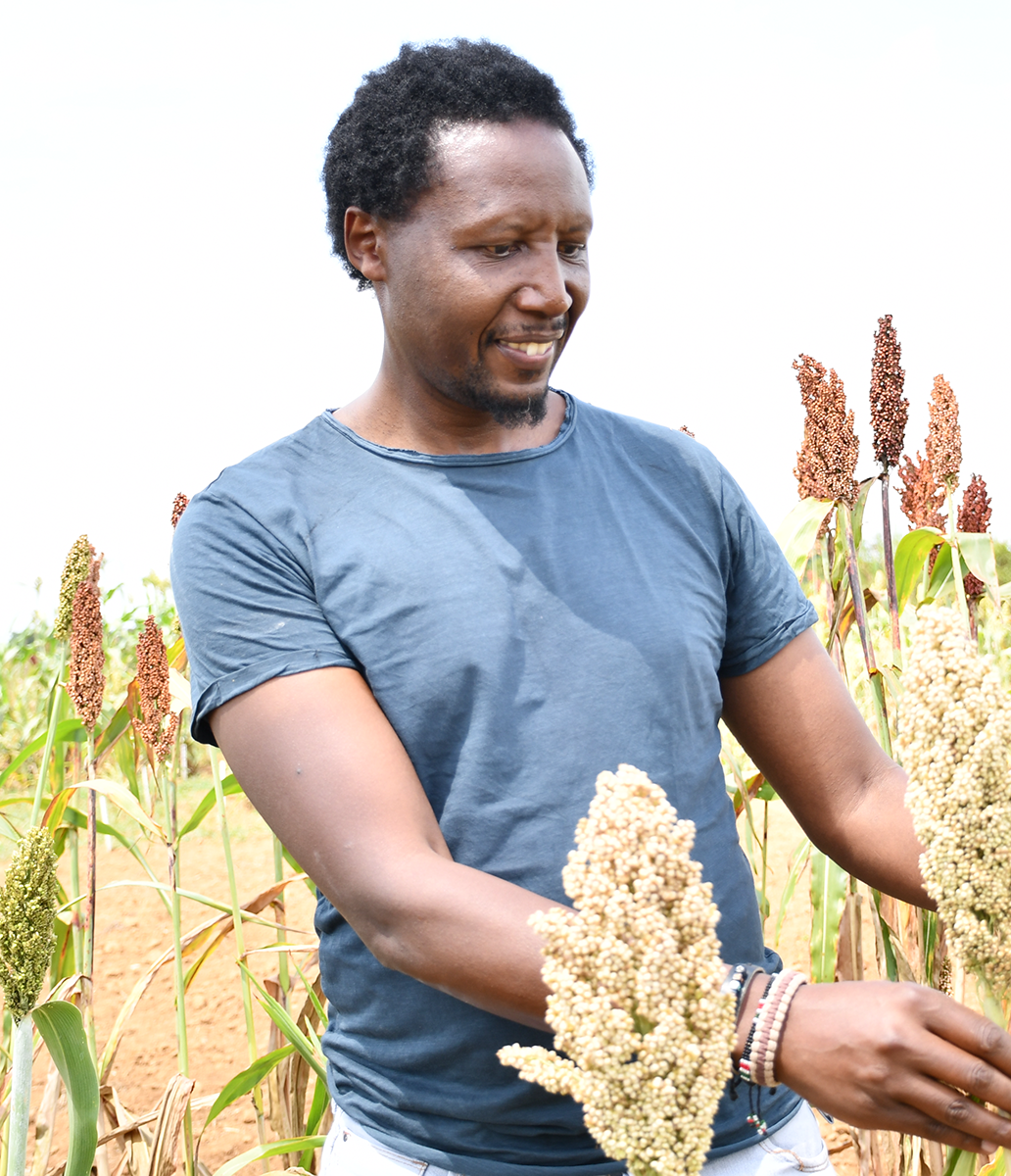
Steven Runo is Professor at the Kenyatta University Nairobi. He uses genetics and genomics tools to improve African crops. One of his great success stories is resistance to Striga, also known as witchweed. Striga is as very damaging parasitic weed threatening the livelyhoods of smallholder farmers in several regions of Africa. He uses the most advanced research tools to understand host-pathogen interaction and applies this knowledge to develop striga resistant African crops. His work is highly appreciated. He was invited keynote speaker at a BOKU mini symposium on New Genomic Technologies in February 2025.
He was teaching the topic: Genomics and breeding tools for improving crops for smallholder farmers in sub-Sahara Africa.
For more information please contact Hermann Buerstmayr
Mini CV Steven Runo
Steven Runo is Professor of Molecular Biology at Kenyatta University in Nairobi, Kenya. He received his BSc and MSc degrees from Kenyatta University. He then was awarded with a Rockefeller Foundation PhD fellowship to study molecular biology as part of a collaboration between Kenyatta University and the University of California in Davis. After completing his PhD in 2008, he accomplished postdoctoral projects at the University of Sheffield (UK) and the University of Virginia (USA) before returning to Kenya and accepting a faculty position at Kenyatta University. Currently, his lab uses molecular genetic tools to understand parasitic plants that limit crop production in Africa and their interaction with the hosts. Steven is a recipient of the Alexander von Humboldt Research Fellowship and the Georg Forster Senior Research Fellowship. In recognition of his contributions to science, Steven Runo was awarded the Royal Society Africa Prize in 2020.
Steven's Publications at Google Scholar
Nature News: CRISPR-edited crops break new ground in Africa. Scientists in the global south use the popular technique to protect local crops against local threats.