Demonstration Areas “Biodiversity”
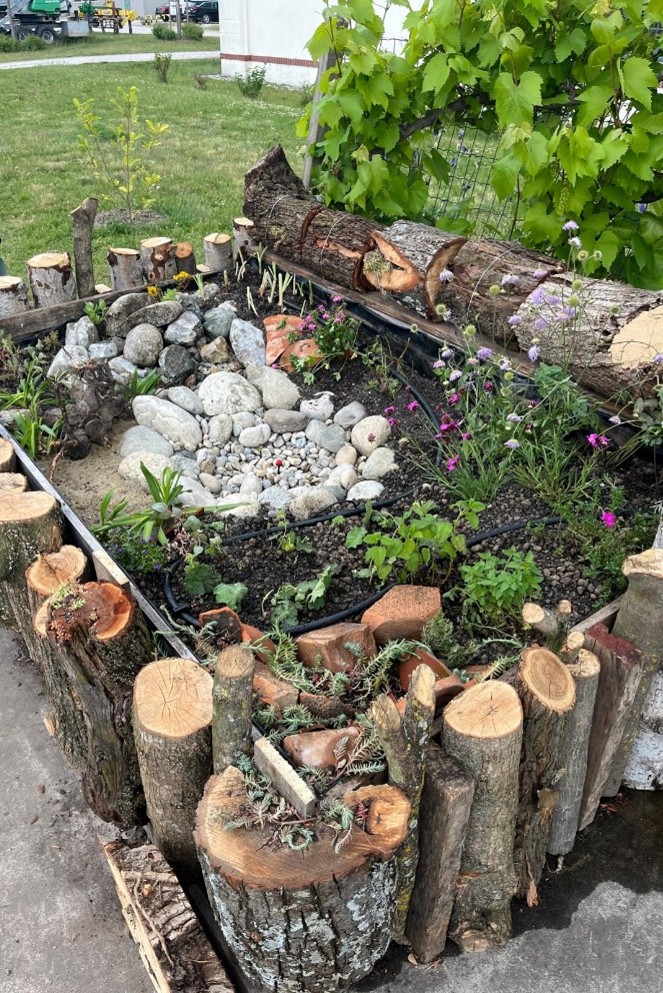
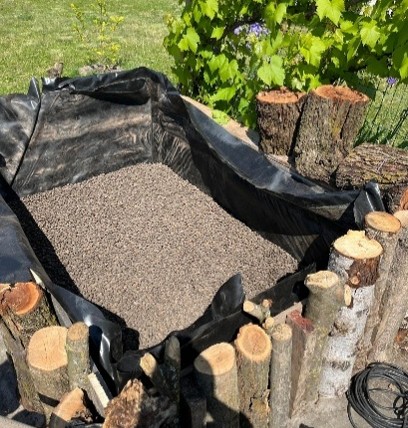
As part of the course "Construction internship: green-blue infrastructure and nature-based solutions SS26" – group “Buttinger/Zluwa – Green Roofs”, a ground-based simulation of an intensive green roof was created. Our sub-group focused on promoting biodiversity, which was achieved by creating a heterogeneous microhabitat with diverse substrate and structural elements. For this purpose, a substrate layer of approximately 30 cm, and in some places up to 50 cm, was applied to create a structured surface modeling and the associated diversity of habitats. Optigrün Intensive Lightweight Substrate was used.
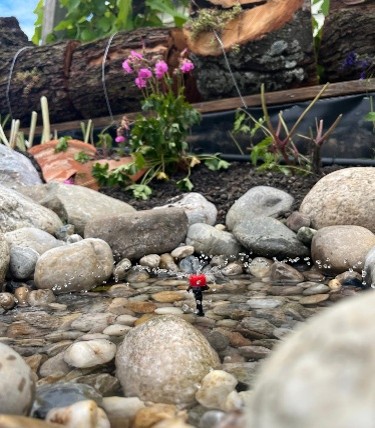
To enhance the structural and ecological diversity, several elements were added to the garden bed as well as the border. Particular importance was placed on the inclusion of deadwood – one border edge was lined with dead tree trunks and old tree roots were incorporated into the surface to provide nesting and shelter for numerous faunae. A section of the deadwood smeared with clay offers additional suitable material for ground-nesting wild bees, wasps, and other insects. Clay shards, piles of different sized rocks, a sand mound and a small, gravel-filled water feature provide diverse habitats. To keep with a natural look, the raised bed was bordered with roundwood.
The planting scheme was carefully selected to ensure a diverse mix of plants. According to the biodiversity supplementary sheet the Austrian standard ÖNORM L1131, biodiversity roofs are classified into three categories. Category 1 requires a minimum of 25 plants. This requirement was met during the planting process.
The result is an ecologically enhanced demonstration site that clearly shows the importance of structurally diverse greening elements for promoting biodiversity and habitat quality.
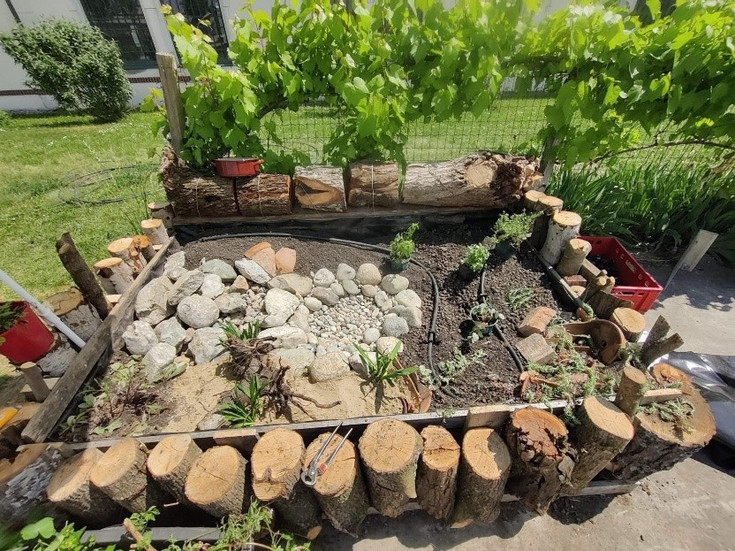
Photo documentation of the demonstration site