Schauflächen „Substrat“
Introduction
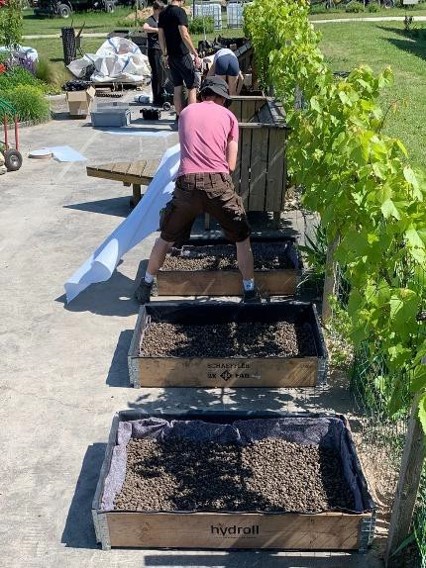
As part of the construction practical course, four demonstration areas were built to illustrate different aspects of green roofs. Since this group focuses on green roof substrate, the aim was to show and examine the influence of a vegetation support layer on the green roof system. For this purpose, the demonstration area was set up like an experiment: four demonstration boxes have the same basic
structure and the same seed mixture (Fig. 3-6); only the green roof substrate differs. This makes it possible to observe which plants grow best on which substrate, or whether there are general differences in vegetation development.
In addition, it was decided to illustrate the water permeability and water retention capacity of the different substrate types. For this purpose, each substrate box includes a bottle containing a miniature version of the layer structure (Fig. 1-2). This can be filled with water, making it possible to observe how quickly the water drains away and how much of it is stored in the substrate.
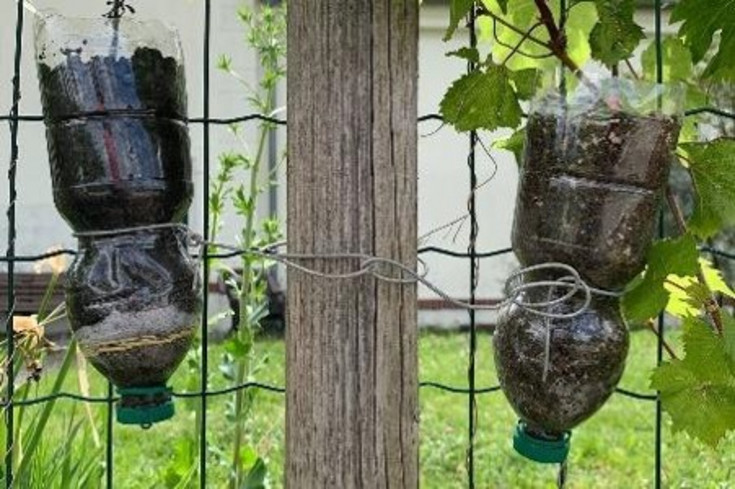
Water runoff extensive/intensive
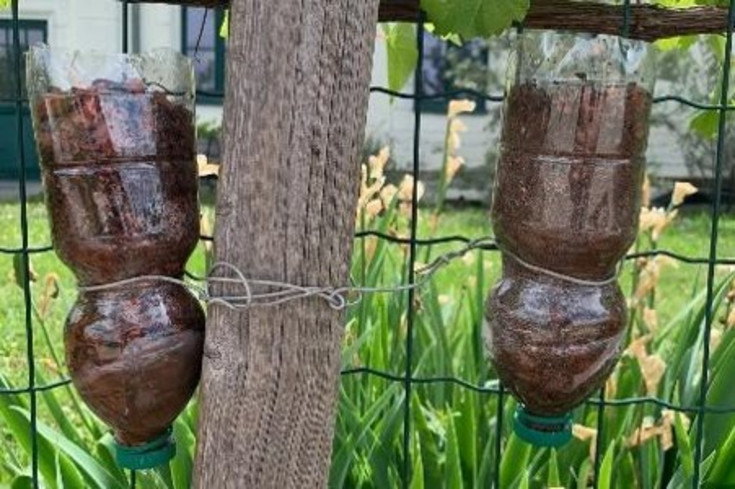
Water runoff brick chippings/topsoil
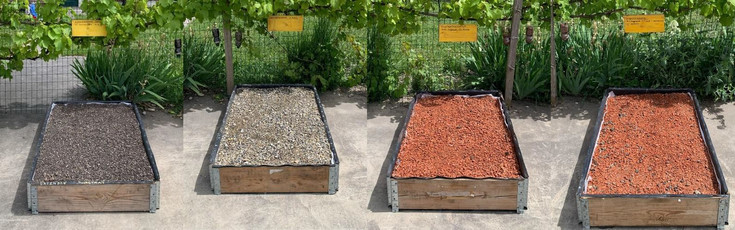
Extensive substrate - Intensive substrate - Crushed brick - Topsoil
Description of the Individual Demonstration Areas
As mentioned above, a total of four different demonstration areas were created. The basic structure is the same in all of them in order to ensure comparability:
- Protective fleece
- 3 cm bulk drainage layer made of expanded clay
- Filter fleece
- 15 cm substrate
- Seed mixture for extensive green roofs
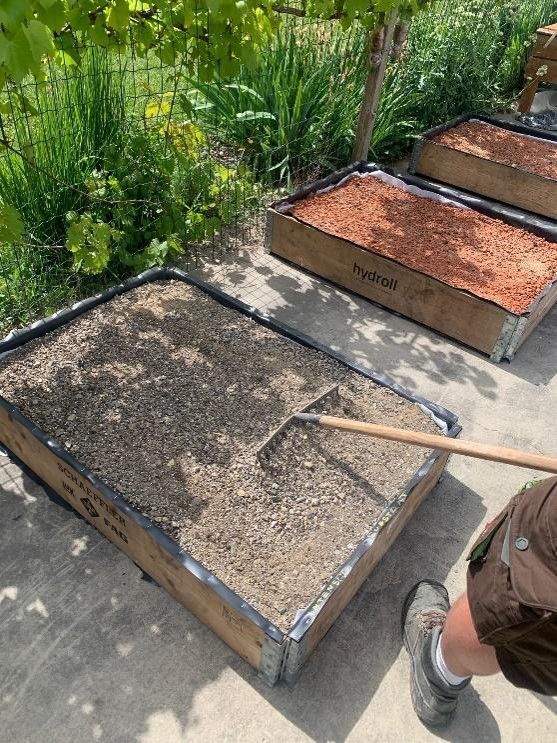
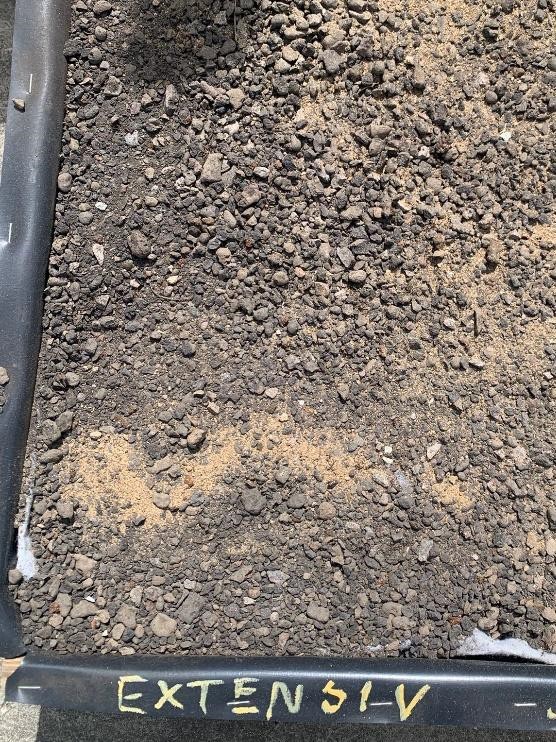
For the first demonstration area, an extensive substrate from Optigrün was used; for the second, an intensive substrate from the company Rath was used. For the third area, a custom extensive substrate was mixed, consisting of 90 % brick chippings and 10 % organic material. The final demonstration box follows an
experimental approach: here, 70 % brick chippings as well as 10 % each of compost, topsoil, and sand were used. These materials were selected because they are circular-economy friendly, reused, and also less expensive than conventional substrates. In general, the purchased substrates meet the requirements of ÖNORM B 1131 for vegetation support layers. In addition, it is stated that they largely comply with the requirements of the FLL Guidelines for Green Roofs. The self-mixed substrates would therefore need to be additionally tested against the relevant requirements in order to guarantee their function
Planning and Work Process:
First, the basic structure of the demonstration area was planned during the seminar meetings. After several improvements and adjustments, the work moved on to execution planning. For this purpose, a list of materials and tools required for constructing the demonstration area was prepared, including, for example, how many litres of substrate and drainage material were needed for the given square metres and layer thickness. Thanks to Fridi, our tutor, we were able to use prefabricated wooden boxes, which saved us several work steps. The actual construction process was as follows:Verbesserungen und Anpassungen ging es zur Ausführungsplanung. Dazu wurde eine Material- und
Werkzeugliste erstellt, die für den Bau der Schaufläche benötigen wird (z.B. Wie viele Liter Substrat und Drainage für die m² und Schichtstärke benötigt werden). Dank Fridi, unserem Tutor, konnten wir auf bereits vorgefertigte Holzkästen zurückgreifen, die uns einige Arbeitsschritte erspart haben. Der eigentliche Bau lief wie folgt ab:
- Aligning the demonstration boxes in a straight line
- Shortening the metal feet to 1 cm using an angle grinder → The wooden box does not stand directly on the ground, allowing water to drain away
- Lining the box walls and upper edge with pond liner to protect the structure from moisture
- Lining the boxes with a protective Fleece
- Filling in the bulk drainage layer made of expanded clay
- Placing the filter fleece
- Filling in the ready-made substrates (extensive and intensive)
- Mixing the recycled Substrates
- Filling in the recycled Substrates
- Attaching the bottles and signs
- Seeding and wateri