
Demonstration Areas “Water”
As the irrigation group, we wanted to demonstrate the extent to which different layer configurations in a green roof have varying retention potentials. This retention potential depends on factors such as substrate type, layer thickness/substrate height, and the type and structure of the retention elements (e.g., low/high solid drainage, loose-fill drainage, backwater throttles, etc.).
To make this concept accessible to non-experts as well, we wanted to provide a view of the structural heights in addition to a purely external view of the bed. We decided to include a sort of Plexiglas window for the cross-sectional view. To implement this in the most space-efficient way possible while still depicting a “realistic” green roof, we constructed a Plexiglas frame that also serves as part of the gravel strip. Three different green roof designs were created as follows.
Extensive Green Roof
The extensive bed has the lowest water storage capacity, with a substrate depth of 10 cm. This capacity is 35 percent by volume and allows for a retention of 32.4 liters. An additional 3 liters are provided by the 20-mm-high solid drainage layer. The flow rate of the extensive substrate is 0.6 mm/min.
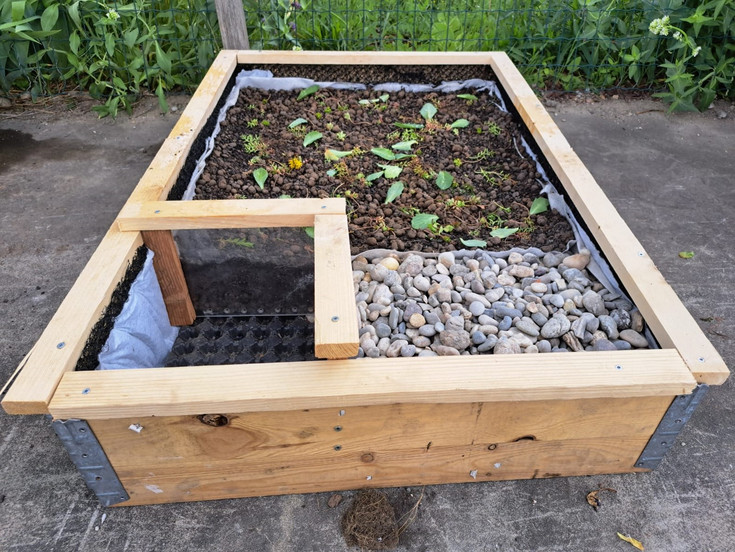
Completed demonstration plot for extensive green roofing
Reduced-Intensity Green Roof
The reduced-intensity bed, with a similar substrate depth of 15 cm, is significantly more efficient at water storage. It achieves a water-holding capacity of approximately 40–45 percent by volume, allowing it to store 54 liters of water. In addition, a 4-cm-thick layer of loose pumice drainage is used here, enabling the retention of an additional 10 liters. The flow rate of the reduced-intensity substrate is 0.4 mm/min.
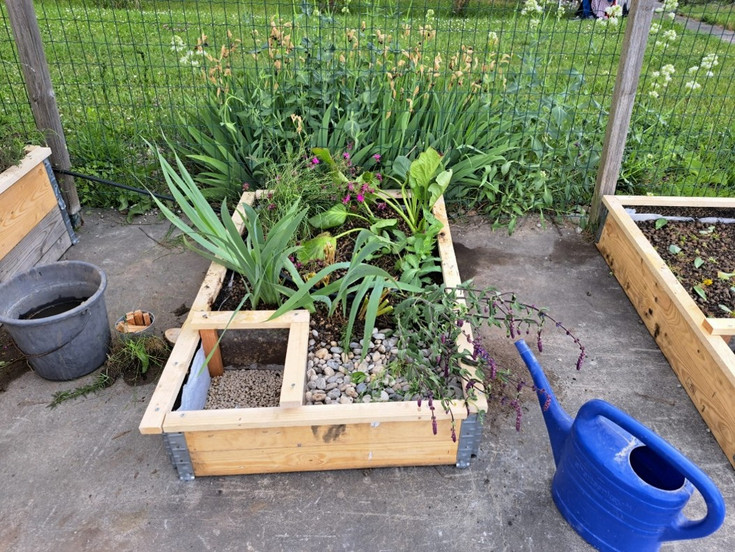
Completed demonstration bed featuring an intensive-reduced green roof
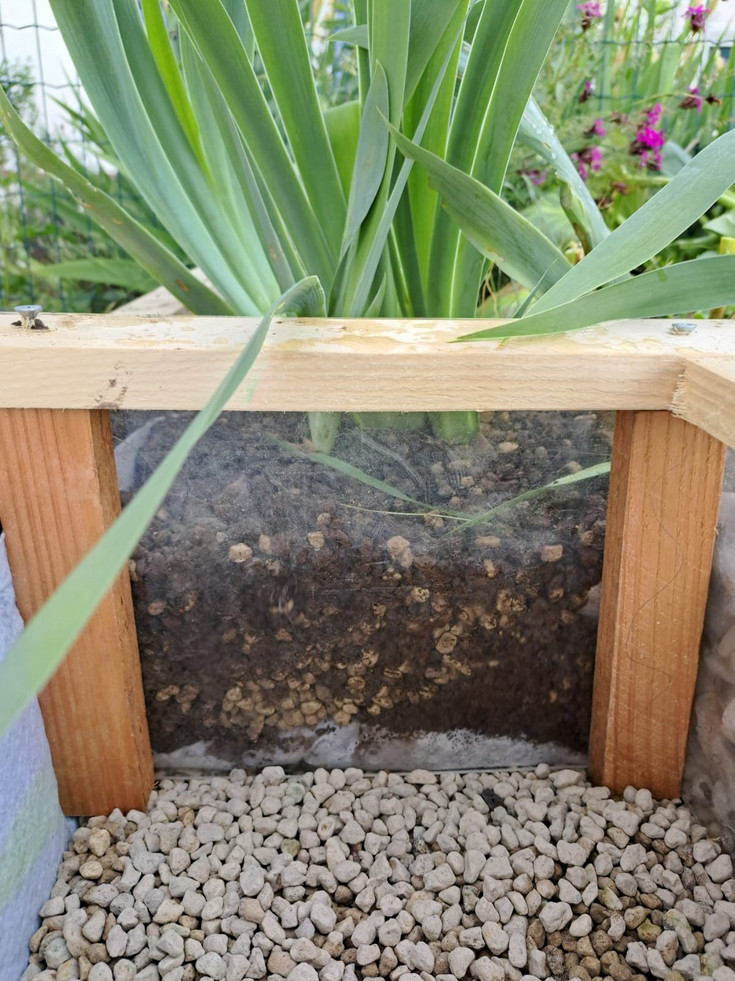
View of an intensive-reduced green roof system
Intensive Green Roof
With intensive green roofing, we aimed to implement a retention throttle principle. Water is dammed up to a depth of 15 cm and stored. This allows it to evaporate over time, cooling the surrounding area, or to be released gradually to prevent the sewer system from becoming overloaded during heavy rainfall events. Additionally, the water is available to the vegetation for irrigation.
The retention throttle itself consists of a pipe with perforations. The holes in the retention throttle limit the flow from the roof drain due to hydrostatic pressure at the openings, which occurs particularly during heavy rainfall events. When the maximum water level is reached, the excess water is discharged through the emergency drain. It is enclosed in a protective box, which is typically made of plastic or metal and serves as a barrier against leaves, plant debris, and dirt. (shown here: yellow wooden box)
Source: https://www.baustoffwissen.de/was-ist-eine-retentionsdrossel-17042026 accessed on June 22, 2026
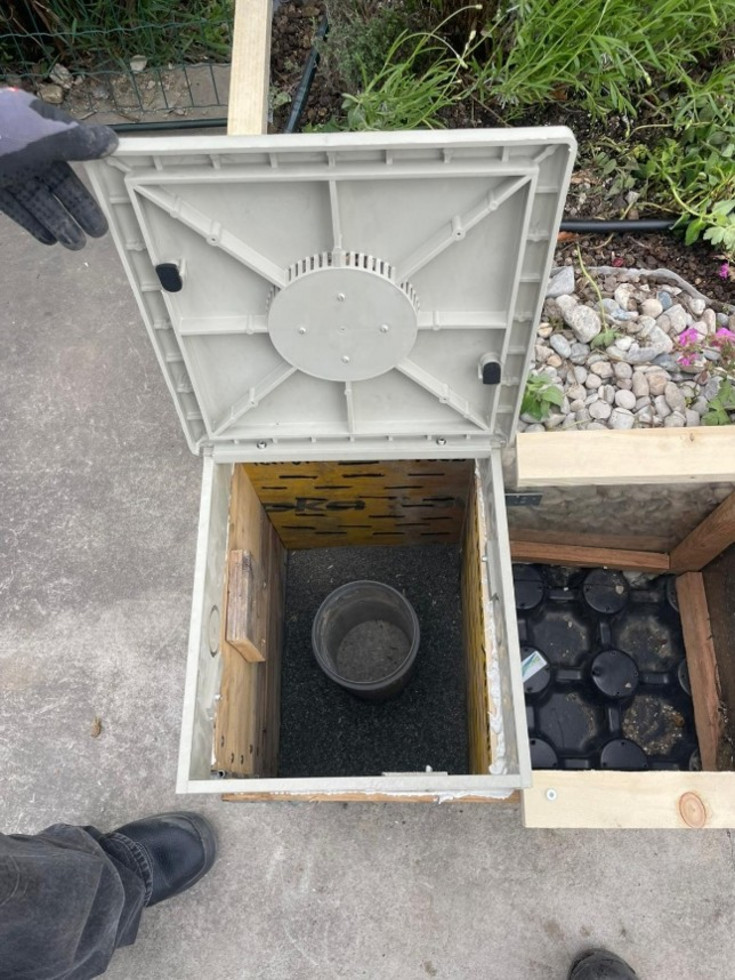
View of the roof drain/display case
The intensive bed, with a substrate depth of 40 cm, has the lowest water-holding capacity. This capacity is 35 percent by volume and allows for a water retention of 32.4 liters. In addition, the 20-mm-high solid drainage layer contributes 3 liters. The flow rate of the extensive substrate is 0.6 mm/min.
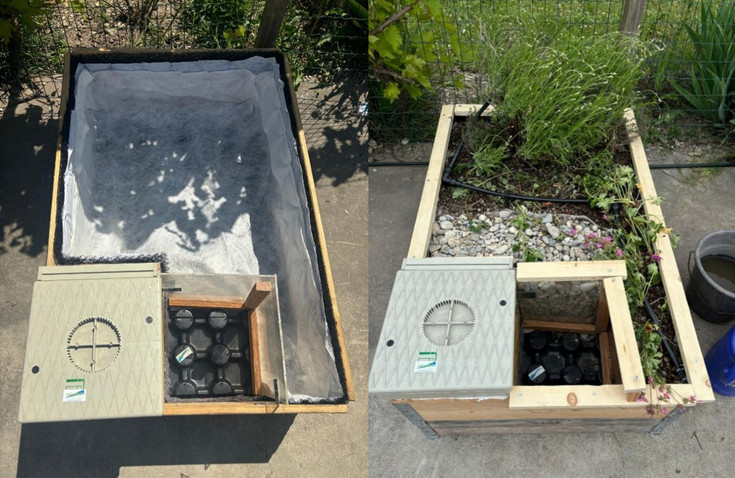
Installation of root-retaining geotextile and completed demonstration bed for intensive green roofing
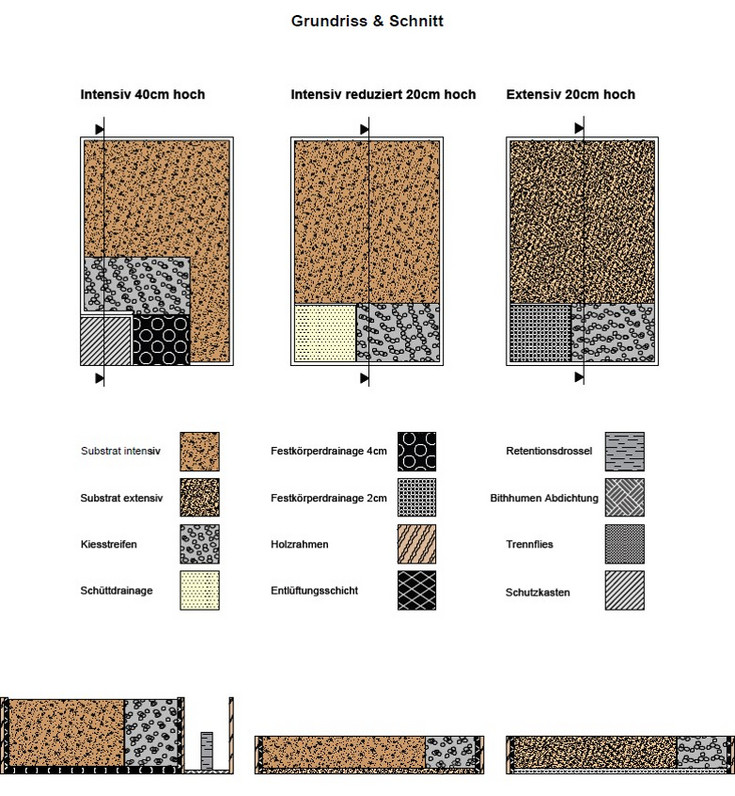
Display of the show beds using CAD