
S-Layer Ultrafiltration Membranes
Membranes Editor’s Choice articles are based on recommendations by the scientific editors of MDPI journals from around the world. Editors select a small number of articles recently published in the journal that they believe will be particularly interesting to authors, or important in this field.
Find more: www.mdpi.com/journal/membranes/editors_choice
S-Layer Ultrafiltration Membranes
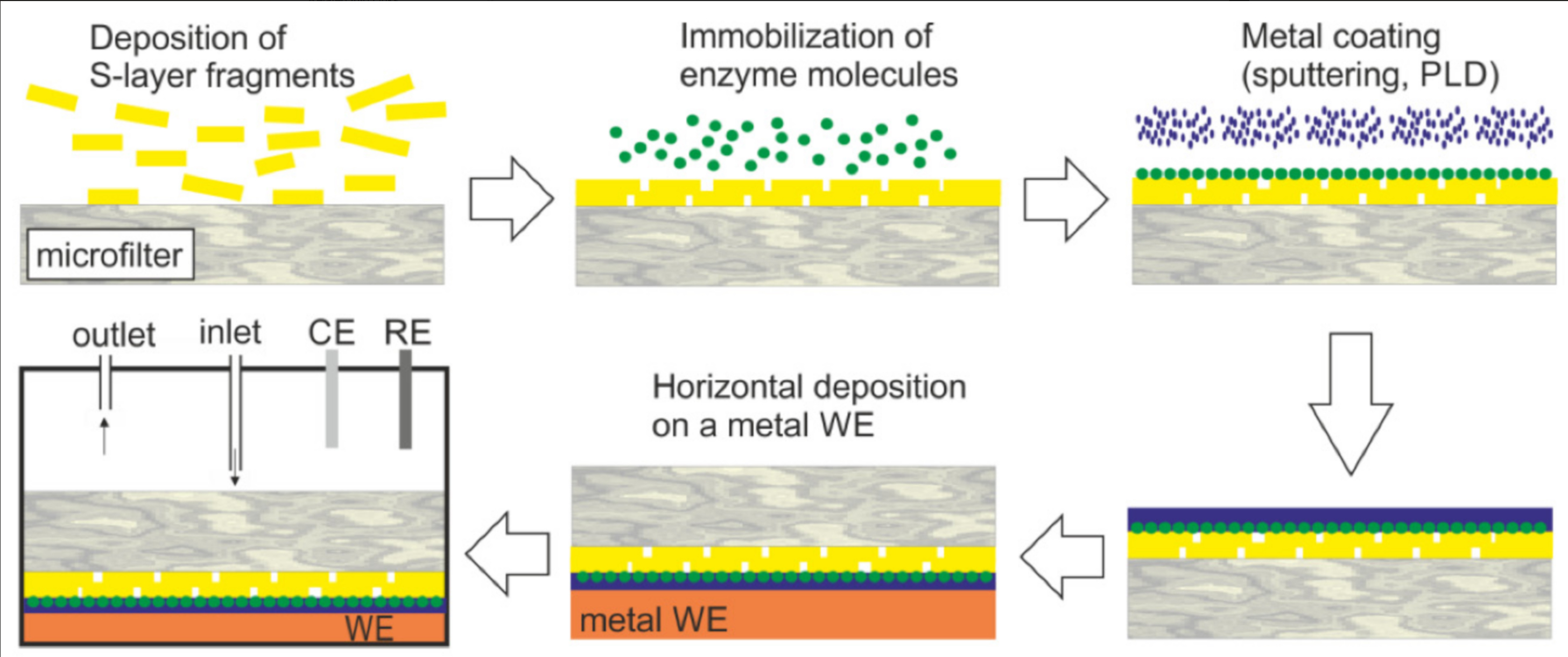
Monomolecular arrangements of proteins forming the outermost surface layer (S-layer) are the most common components of the cell envelope of prokaryotic organisms. S-layers are highly porous and periodic structures that exhibit identical physicochemical properties for each individual molecular unit down to the nanometer scale. The pores in the S-layers have identical morphology and size (diameters organism-dependent between 4 to 8 nm) and are thus on the order of those in ultrafiltration membranes. The functional groups on the surface and in the pores of the S-layer protein lattice are accessible for chemical modification and for binding of functional molecules in a very precise manner. S-layer ultrafiltration membranes (SUMs) can be prepared by depositing S-layer fragments as a coherent (multi)layer on microfiltration membranes. After inter- and intramolecular crosslinking of the composite structure, the chemical and thermal resistance of these membranes has been shown to be comparable to that of polyamide membranes. The surface properties and molecular sieving characteristics of SUMs can be tuned by chemical modification and/or specific binding of molecules of different sizes. SUMs can be used as matrices for the
controlled immobilization of functional biomolecules (e.g., ligands, enzymes, antibodies, antigens, etc.) as required for applications such as biosensors, diagnostics, enzyme, and affinity membranes. In addition, SUMs are excellent scaffoldings to stabilize functional lipid membranes for membrane protein-based biosensors.
Full article in: Membranes 2021, 11(4), 275; https://doi.org/10.3390/membranes11040275