
Genomic diversity of wild and cultivated beets (genus Beta)
SUPERVISOR: Heinz HIMMELBAUER
PROJECT ASSIGNED TO: Thomas HOLZWEBER
Crop Wild Relatives (CWRs) represent an important source of genetic diversity for crop improvement, as they may contain alleles associated with pathogen resistance, tolerance to environmental stresses and adaptation to changing climatic conditions. Within the genus Beta, wild relatives of cultivated beet are genetically closely related to modern beet crops and therefore constitute valuable resources for breeding. However, the genomic diversity present in wild Beta populations is still insufficiently characterized, and current genomic analyses may not fully capture highly divergent genomic regions.
This doctoral project aims to improve the genomic and epigenomic characterization of cultivated and wild Beta germplasm. As part of the project, genomic resources for table beet have been established and are being used to investigate genome structure, variation and epigenomic patterns in cultivated beet. The project further addresses genetic diversity and genome variation across Beta germplasm, with particular attention to methodological challenges associated with the analysis of genetically diverse accessions and the representation of variation in comparative and population genomic analyses.
A further focus is the development and evaluation of computational approaches for studying epigenomic variation. Genomic sequence information, sequencing-derived signals and modern machine-learning approaches are being explored to better understand and predict patterns of DNA methylation in beet genomes.
Overall, the project aims to contribute to a more comprehensive understanding of genomic and epigenomic diversity in Beta and to facilitate the identification of genetic variation with potential relevance for crop improvement.
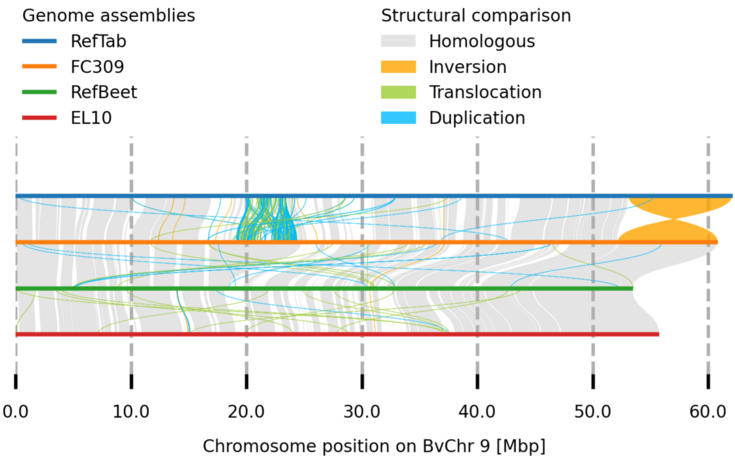
Structural variation in table beet. Comparative alignment of chromosome 9 between table beet and sugar beet genomes reveals a large terminal inversion of approximately 9 Mbp.