
A Single-Cell Cryo-SEM Approach to Microbial Adhesion at Oil–Water Interfaces
SUPERVISOR: Erik REIMHULT
PROJECT ASSIGNED TO: Xinning ZHOU
The adhesion of microorganisms to oil–water interfaces represents a crucial early step in biofilm formation and plays a key role in a wide range of environmental, medical, and industrial processes, including oil spill remediation and food processing. This phenomenon is commonly attributed to bacterial surface wettability; however, current approaches assess this property only indirectly and typically at the population level, thereby ignoring cell-to-cell variability and mechanistic detail.
In my project, MicroCAM, I will develop a novel experimental method to directly measure the interaction of individual bacterial cells with oil–water interfaces using freeze-fracture shadow-casting cryogenic scanning electron microscopy (FreSCa cryo-SEM), I will image microorganisms at oil–water interfaces in nanometer-scale resolution. This approach enables the systematic discrimination between distinct adhesion modes, including partial insertion of the cell body into the oil phase and attachment mediated by extended surface appendages (Figure 1).
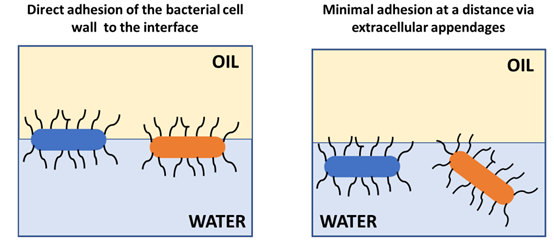
Figure 1. Schematic illustration of single-cell adhesion modes at an oil–water interface.
By combining such imaging of single bacteria with the characterization of their surface properties, such as cell morphology, surface charge, appendage expression, and the secretion of surface (biosurfactants), I will uncover the physical mechanisms governing microbial adhesion at oil–water interfaces and the subsequent establishment of biofilms.
Overall, the project provides a more precise and physically grounded understanding of microbial surface behavior than oversimplified descriptors such as “hydrophilic” or “hydrophobic”. The results will contribute to the rational design of strategies to control microbial adhesion and biofilm formation in environmental, biomedical, and industrial contexts.