Mechanical treatment and characterization of plant proteins for their utilization as wood adhesives
SUPERVISOR: Johannes KONNERTH
PROJECT ASSIGNED TO: Ritika MALIK
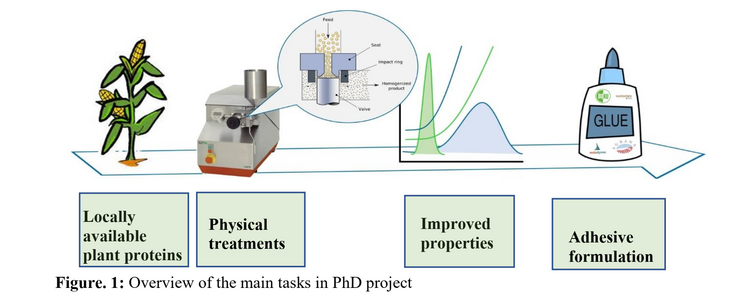
Synthetic wood adhesives, such as urea formaldehyde and phenol formaldehyde resins, dominate the wood composites industry but are associated with health and environmental concerns, formaldehyde emissions, and limited sustainability. Plant proteins, including maize and potato protein, are abundantly available in Europe and offer a renewable alternative; however, their native globular structures and poor moisture resistance currently limit their performance as structural adhesives. While chemical modification strategies have been widely explored, the potential of mechanical processing routes to tailor protein structure and functionality remains insufficiently understood, particularly in the context of wood adhesion. The central research gap addressed in this PhD is the lack of systematic, materials science-based understanding of how different mechanical treatments influence the structure property performance relationships of plant proteins used as wood adhesives. This project aims to (i) apply and compare scalable mechanical/thermo-mechanical modification techniques; (ii) characterize the resulting changes in plant proteins structures/properties; and (iii) correlate these changes with adhesive strength and durability under both dry and wet conditions. By benchmarking protein-based adhesives against conventional synthetic systems, this research seeks to establish design principles for high-performance, bio-based wood adhesives suitable for industrial application.