
Mechanistic investigation of bioleaching of phosphorus for fertilizer applications
SUPERVISOR: Georg M. GÜBITZ
PROJECT ASSIGNED TO: Patrick GERL
Phosphorus is an essential element for all living organisms because it plays an essential role in biological processes. It is a critical raw material for food production, but it is limited, regionally concentrated and often mined under harmful conditions. Here, bioleaching of mono-incinerated sewage sludge for the recovery of phosphorus will be investigated. Therefore, for solubilization contact leaching using enriched acid-producing bacteria and pure strains of established bioleaching bacteria will be assessed.
During contact leaching, bioleaching microorganisms form monolayer biofilms on the solid particle. Interaction of the bacterial membranes with solid ash particle surfaces and membrane-bound proteins which contribute to the solubilization of phosphorus will be studied. In addition, the role of biosurfactants involved in the phosphorus dissolution process will be elucidated which are known to have a positive effect on solubilization during metal leaching. Moreover, microbial peptides involved in the process of leaching phosphorus will be identified and characterized. The recovered and bioavailable phosphates in the lixiviant will be precipitated to struvite. The precipitated struvite will afterwards be integrated into a polymer-matrix to mediate a slow and controlled release of the fertilizer during application.
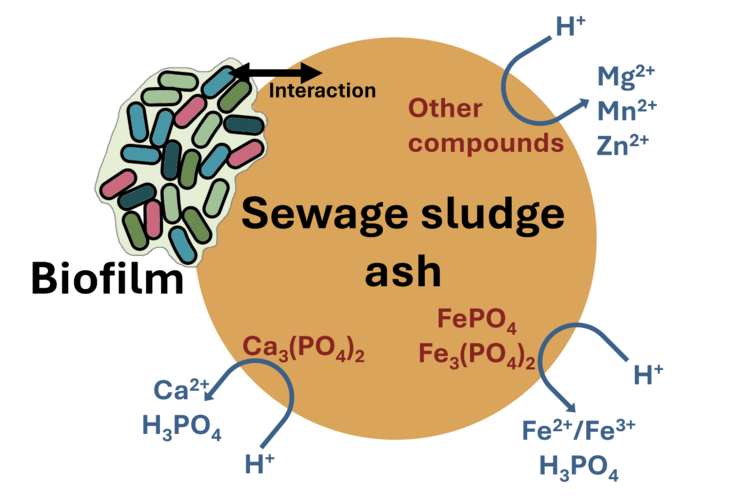
Figure 1: Interaction between sewage sludge ash (SSA) particle and bioleaching organism will be investigated.